
Finding more room in a Charlestown row house by digging out the basement
By digging 30 inches down, the house gained a lounge and gym, sunlight included.
By Marni Elyse Katz Globe Correspondent,Updated March 27, 2025, 5:00 a.m.
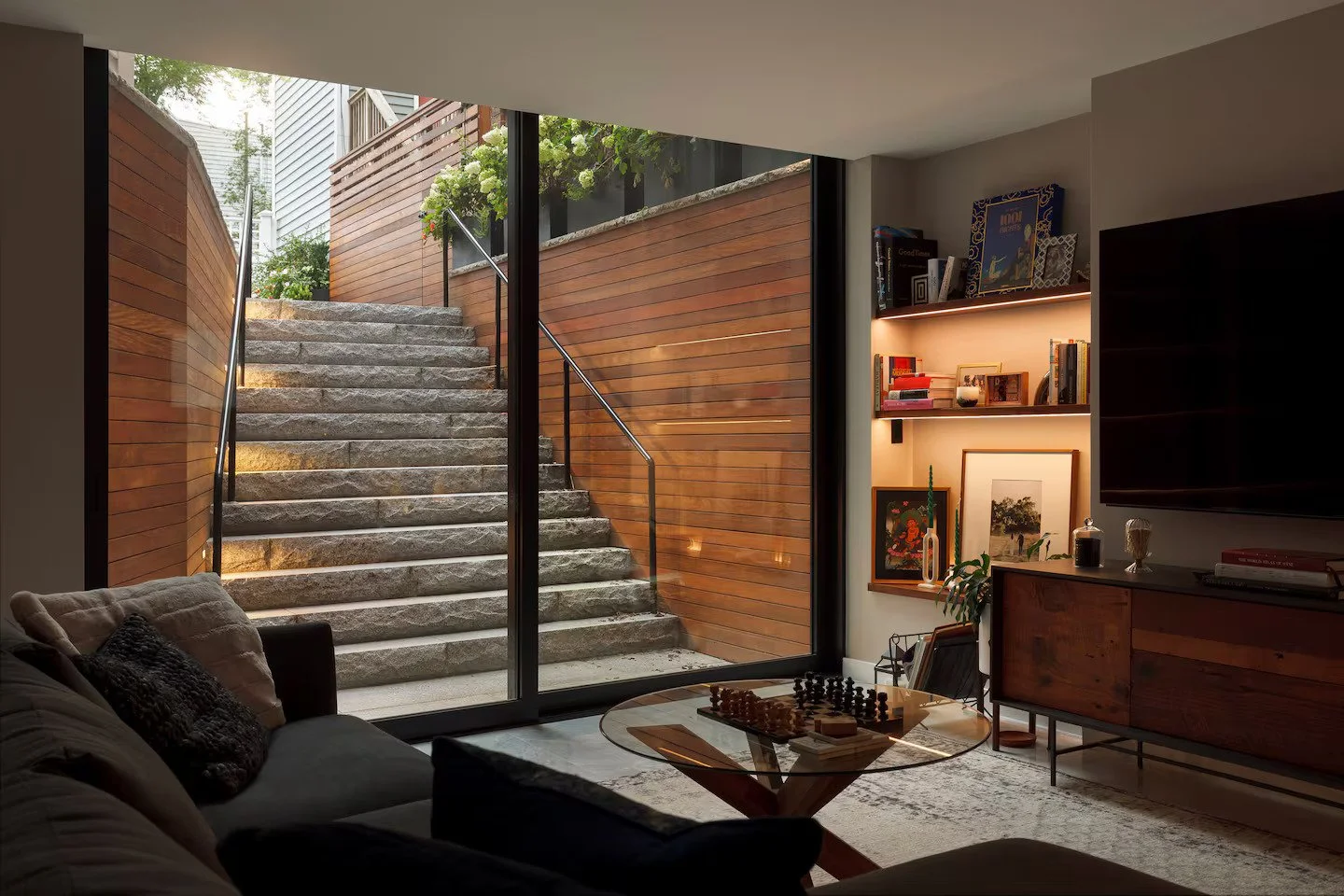
The new stairs down to the basement.Matt Delphenich
Mahfuza Ahmed’s spice collection was the tipping point in deciding whether she and her husband, Mehran, would move from the Back Bay. “He purchased the apartment next to his a few years back with hopes of one day combining them, but we realized there wouldn’t be enough space for my spices,” Mahfuza says with a laugh. “Plus, my mother visits for months from Bangladesh.”
So, the couple, who both favor city living, set their sights on a single-family in Charlestown where they could grow their family and host Mahfuza’s mom.
The Ahmeds purchased a mid-19th-century Greek Revival row house. Like many historic homes in the neighborhood, a narrow two-story wing jutted 30-plus-feet out from the back of the main redbrick structure. The 2,850-square-foot home mostly fit their needs. But the back wing, which tapers to just 8 feet wide at the end, proved awkward in its layout. (It also tended to vibrate when the husband’s treadmill workout was in full swing.)
Looking to finish the basement with a dedicated gym and hangout area — and also remedy a flow issue on the second-floor — the couple contacted Isamu Kanda of I-Kanda Architects, also based in Charlestown. Well-versed in expanding homes with tight footprints and unique constraints, the architect transformed the dark basement beneath the main structure into appealing living space, workout room included.
Being a basement, the space called out for increased headroom — the ceiling was only about 6-feet high thanks to a tangle of pipes — and natural light. A fix required digging — lots of digging.
“We excavated 30 inches down,” Kanda says, “then six inches more for a sunken gym that accommodates the treadmill and overhead exercises.”
To pull sunlight into the subterranean space, Kanda designed a massive, open stairwell behind the main part of the house, alongside the skinny wing. A flight of granite stairs descends from the patio to an 11-foot wide, floor-to-ceiling slider that opens into the newly finished underground rooms.
“The granite stairs and trim play off the granite window headers and sills on the front and back of the exterior,” Kanda says. Granite also tops the ipe-clad concrete planters that line the stairwell. “Vines can drop down from the planter boxes to create a green wall,” Kanda says. “The greenery helps bring the outside in.”
Natural light spills into the seating area. Polished floor tiles help bounce light around the bright white room, as does the expanse of mirror in the gym. A floor-to-ceiling glass wall separates the two spaces, allowing light — but not a lot of noise — to pass between them. For more privacy, the couple can hang a curtain from a track embedded in the ceiling.
Stairs lead up to the kitchen, which fills the back wing of the first floor. The couple worked with Divine Design Center in Boston to outfit the space with new cabinetry, leaving the overall layout intact. The kitchen’s biggest drawback was its lack of pantry storage. Taking advantage of the room’s depth, Kanda covered the back wall with cabinetry that masquerades as wall paneling. Mahfuza reports the added storage (including for her spice collection) helps keep the kitchen so tidy that guests can’t believe they have a toddler.
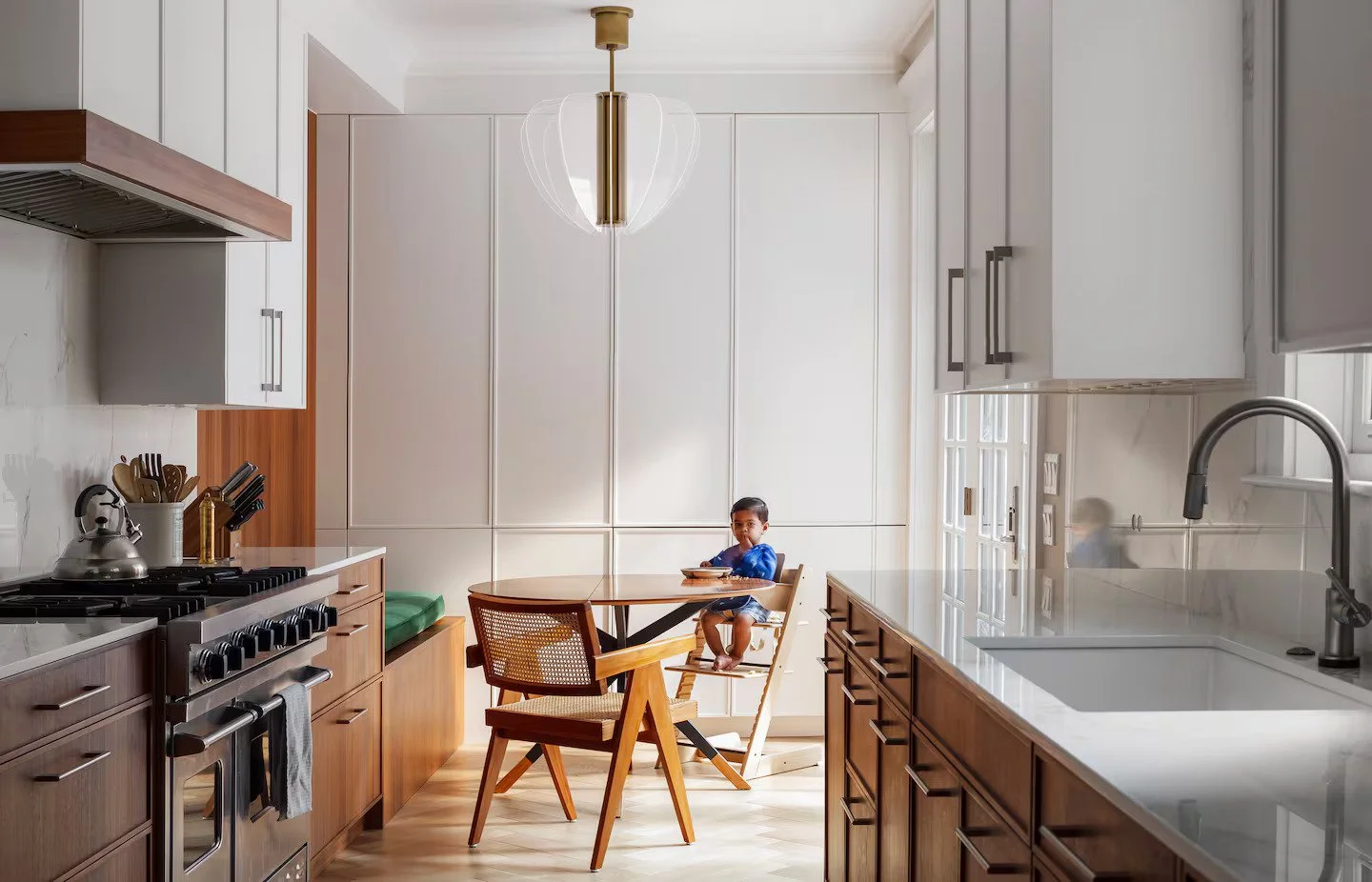
The couple’s toddler sits in the breakfast area, which Mahfuza Ahmed furnished with a BoConcept table, Industry West chair, and pendant light from Visual Comfort & Co.Matt Delphenich
That cabinetry was installed over a mural painted by the prior owner’s mother; Mahfuza is certain someone will uncover it someday, delighted by the surprise. “The cabinets shortened the room by two feet,” Kanda says. “Padding the back wall made the room more comfortable by changing its proportion and scale.” A built-in bench maximizes seating and defines the eating area.
Mahfuza refreshed the dining room and living room with new paint, furniture, and lighting. One flight up, Kanda reworked the space outside the primary bedroom and nursery, as well as the entire rear wing beyond it. The main problem? “You had to walk through the bathroom and laundry room to access the back bedroom,” Mahfuza says.
The architect turned the bathroom at the top of the main staircase into a hallway with the washer and dryer along one side. Next, moving into the wing, he turned the former laundry room into an airy landing with floor-to-ceiling closets that flank a built-in bench. The remainder of the wing became a luxurious primary bath. The front part of the bath with the vanity and partitioned-off toilet boasts a checkerboard-patterned floor that Mahfuza selected so the space would not skew too modern. A glass wall reminiscent of the one in the basement divides it from the wet room. Here, there’s an overhead rain shower and soaking tub centered under a new skylight that washes the moody space in sunlight. “Our son spends 40 minutes playing in the tub every night and I can shower at the same time,” Mahfuza says.
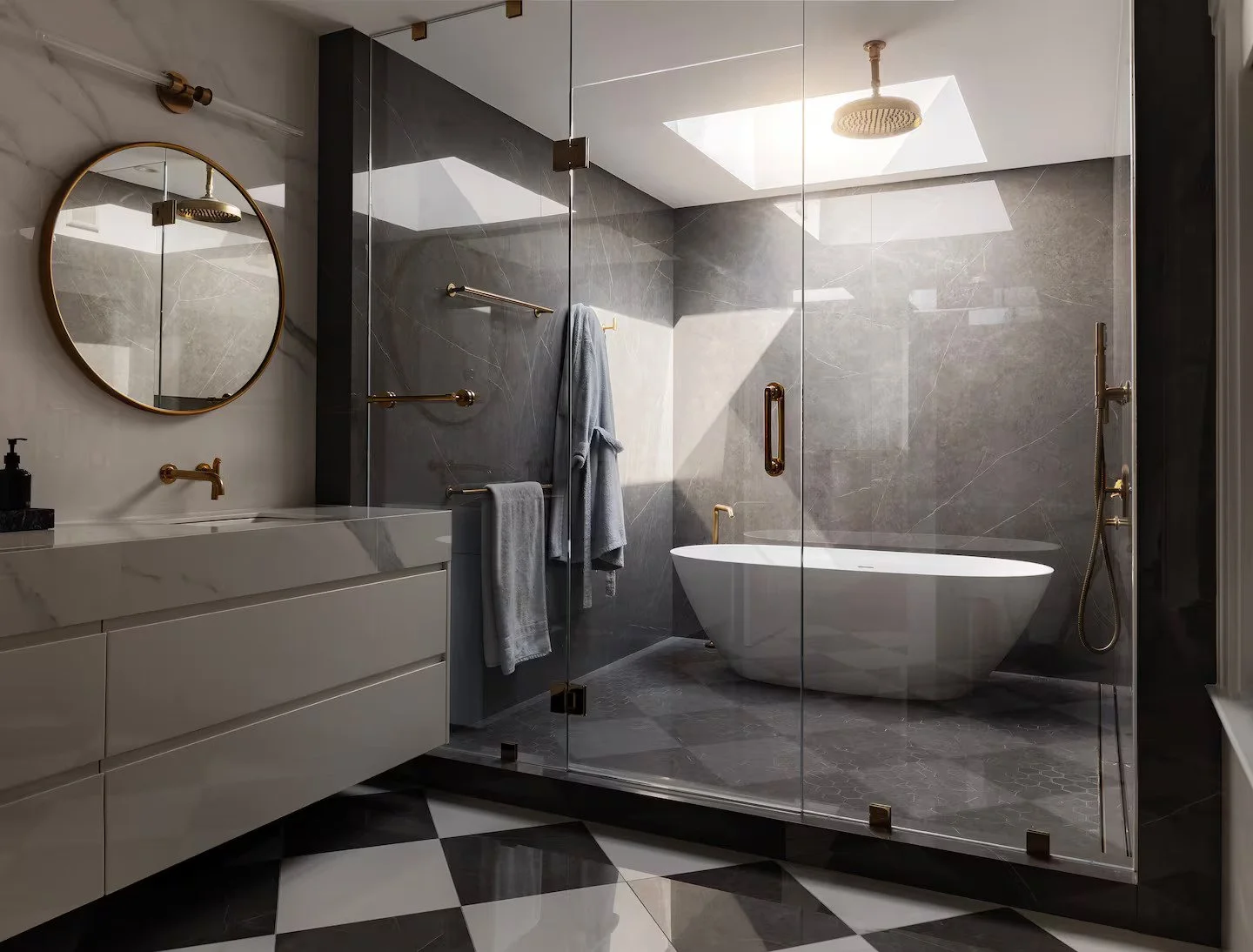
The tub sits under a 4-by-4-foot skylight in the primary bath’s 8-by-8-foot wet room. The room is located directly above the kitchen.Matt Delphenich
Kanda is satisfied, too. “The layout [originally] felt like a long hall to nowhere,” the architect says. “Now it’s a long walk with a destination and a sculptural, sun-lit focal point.”
Resources
Architect: I-Kanda Architects
Cabinetry: Divine Design Center
Contractor: Brite Builders Incorporated
More photographs
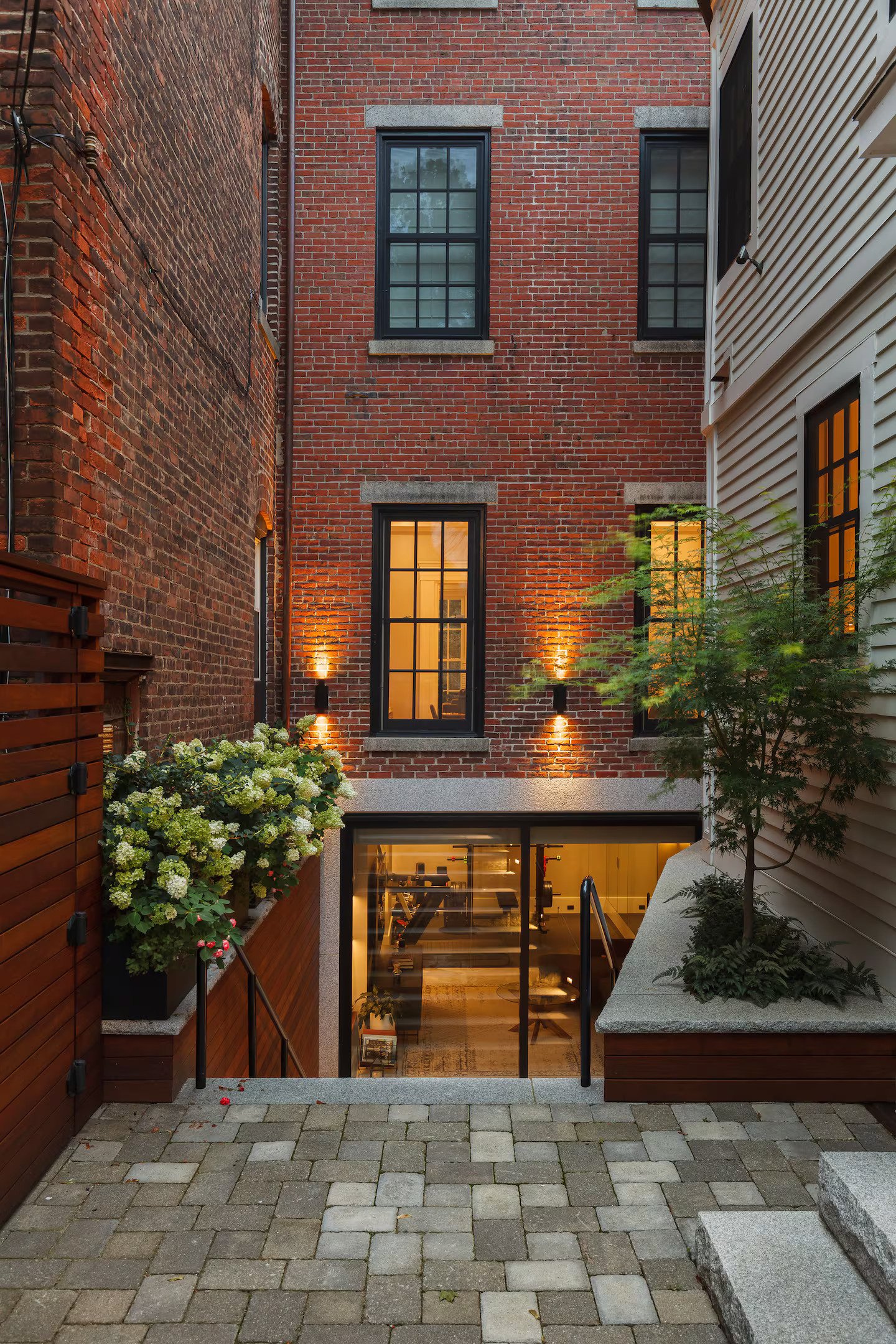
New granite stairs descend between the home’s back wing (right) and the neighbor’s brick wall.Matt Delphenich
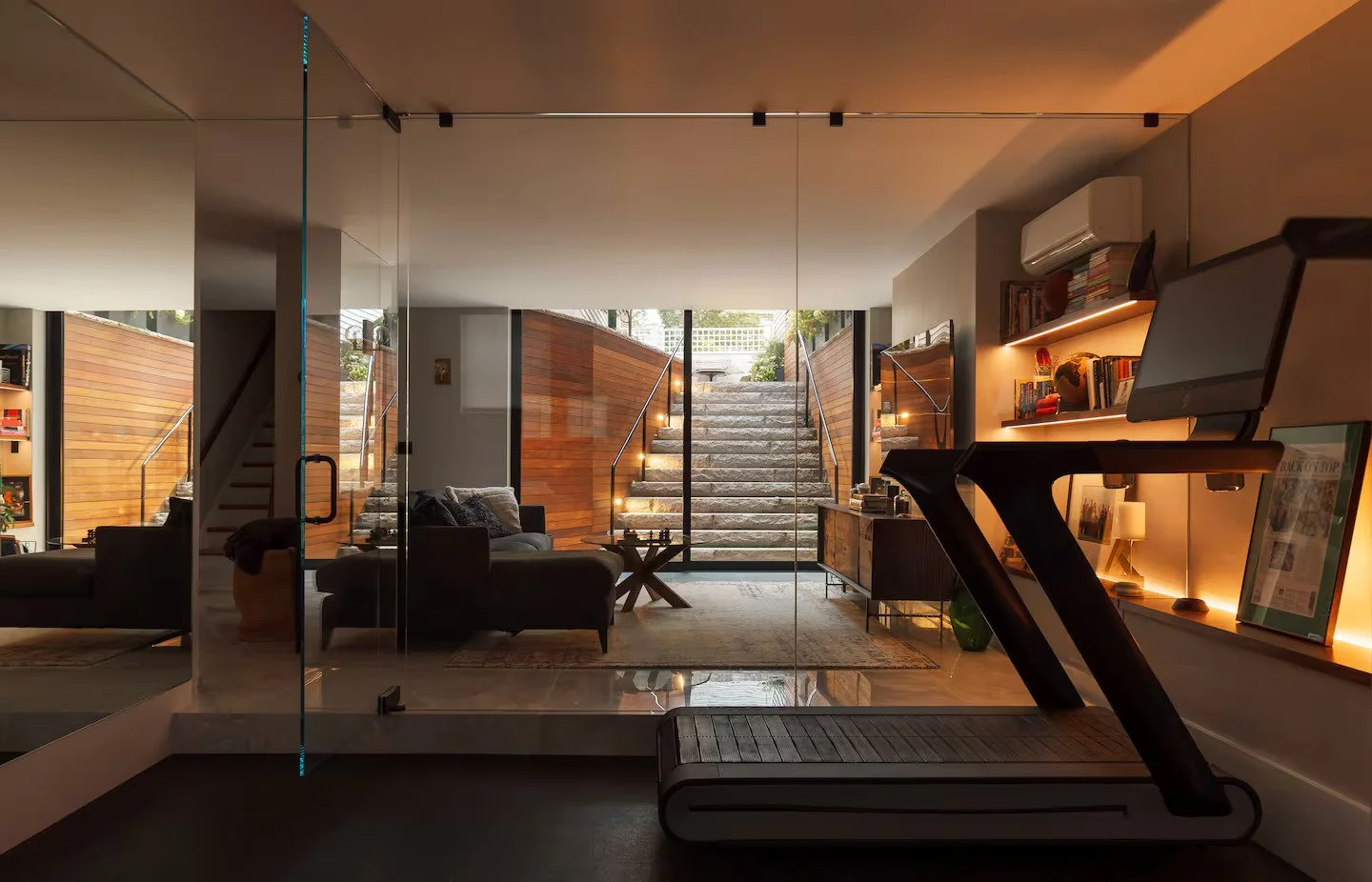
Architect Isamu Kanda designed walnut shelving to bridge the jogs in the concrete foundation.Matt Delphenich

At top: The basement of the row house before the excavation project started. Bottom: The basement during excavation.From I-Kanda Architects
Marni Elyse Katz is a contributing editor to the Globe Magazine. Follow her on Instagram @StyleCarrot. Send comments to magazine@globe.com.
For the full original article, please visit The Boston Globe here.